Frozen Squid Ring has become a practical format for foodservice, retail, and prepared-meal manufacturers. Its uniform shape supports portion control, quick cooking, and efficient cold-chain handling. Yet supplier selection cannot rely on price alone. Buyers must examine species, catch area, processing method, glazing percentage, carton weight, and documented traceability.
The FAO’s State of World Fisheries and Aquaculture 2024 reported 185 million tonnes of aquatic animal production in 2022. About 89% was used for direct human consumption, highlighting the scale of the global seafood supply chain. FAO FishStat data also show the importance of cephalopods in international fisheries, although squid volumes vary sharply by species and fishing season. That variation affects availability, size grades, and contract pricing.
UN Comtrade trade records can help buyers compare import patterns and supplier markets. However, customs data may combine different squid species and product forms. It is useful, but not perfect. Buyers should verify every specification directly with exporters.
Reliable suppliers normally provide product photographs, laboratory reports, harvest details, and export documentation. They should also explain glazing levels clearly. A heavily glazed ring may appear cheaper while delivering less net seafood. Cold storage at -18°C or below remains essential for quality protection. Temperature abuse can create dehydration, yellowing, and soft texture.
This guide reviews leading Frozen Squid Ring suppliers for global buyers. It considers processing capability, certifications, packaging flexibility, food-safety systems, and shipment reliability. No ranking stays permanent. Markets change, and supplier performance requires regular review. Careful buyers should request samples before signing large contracts. Small details matter.
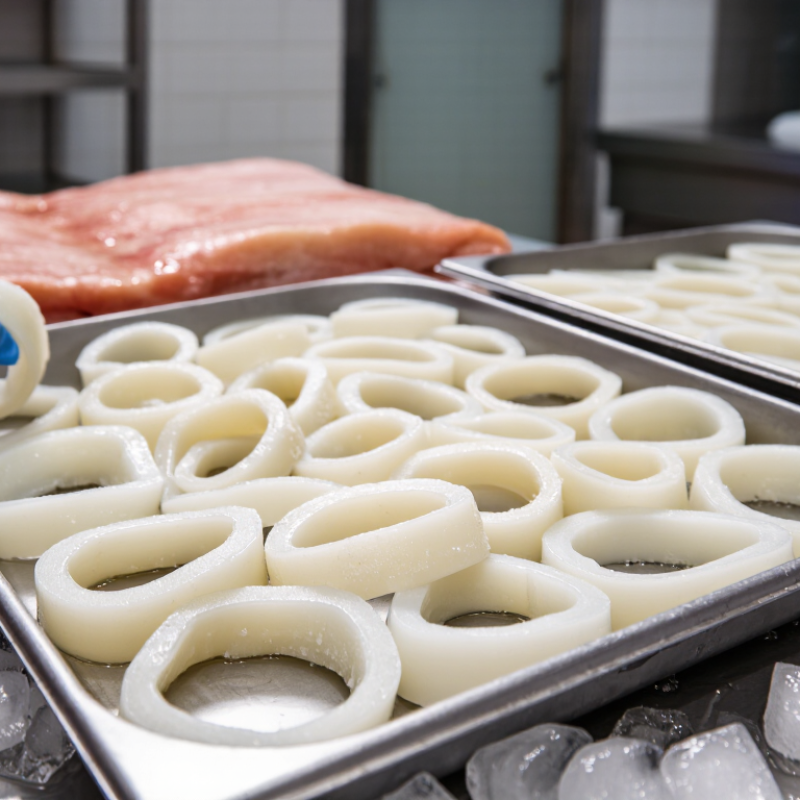
Frozen squid rings differ by species, processing method, and cold-chain history. Common raw materials include Illex argentinus, Todarodes pacificus, and Loligo species, as noted in FAO GLOBEFISH cephalopod market reviews. Suppliers usually offer natural rings, cleaned rings, skin-on rings, cooked rings, and breaded products. IQF packs separate pieces easily. Block-frozen packs generally reduce cost but require full thawing.
Commercial grades are not globally uniform. Buyers should define measurable criteria instead of accepting “premium” language. Key specifications include ring diameter, thickness, count per kilogram, color, odor, breakage, and foreign-material control. Glazing is important because excessive ice increases invoice weight without increasing edible yield. Codex guidance addresses quick-frozen fish products, while national rules may set different limits for additives, labeling, and microbiological safety. Phosphate treatment, when used, should be declared clearly.
FAO’s The State of World Fisheries and Aquaculture 2024 reported 185.4 million tonnes of aquatic animal production in 2022, with about 89% used for human consumption. That broad figure shows the scale of seafood trade, but it does not guarantee consistent squid quality. Receiving teams should check core temperature, carton integrity, net weight after deglazing, and cooking loss. A practical specification may require -18°C or colder storage, documented batch codes, and an agreed glaze tolerance. One weakness remains: size counts can vary after cutting. I would request retained samples before signing a long-term supply agreement.
Typical commercial size grades are categorized by ring diameter. The values below show the midpoint of commonly specified diameter ranges for frozen squid rings; actual specifications may vary by species, processing method, and buyer requirements.
Product specifications commonly reviewed by global buyers include ring diameter, cut thickness, raw or cooked form, skin removal, glazing percentage, net weight, and frozen storage conditions. Diameter values are shown in centimeters.
Evaluating global frozen squid ring suppliers requires more than comparing quoted prices. Ask for species identification, catch area, processing date, glazing percentage, size count, and storage temperature. A reliable supplier should provide lot-specific records, not generic brochures. Check whether certificates come from recognized bodies and match the exporting facility. Small mismatch, big concern. Request recent laboratory results for microbiological safety, heavy metals, and additives permitted in the destination market. Documents should be clear, current, and independently verifiable.
Cold-chain evidence matters as much as paperwork. Review loading photos, container temperature logs, and the route to your port. Frozen rings should arrive hard, separate, and free from excessive frost or dehydration. Ask how the supplier handles power failures, port delays, and rejected lots. Their answer reveals operational maturity. A paid sample is useful. Cook it, weigh the glaze, inspect texture, and compare the label with the shipment. Do not judge quality from appearance alone; thawing can hide soft texture and drip loss.
Communication is another practical test. Suppliers should answer technical questions directly and explain limits without exaggerated promises. Confirm payment terms, packaging, minimum order quantity, claims procedures, and recall contacts in writing. An audit or live factory video can add confidence, though neither replaces verification. I would keep a risk score for traceability, consistency, service, and compliance. It is not perfect. Markets change, and one successful shipment proves little. Recheck performance every season, especially when size, origin, or processing sites change.
Quality, safety, and traceability should guide every frozen squid ring purchase. FAO’s 2024 State of World Fisheries and Aquaculture reports 185.4 million tonnes of aquatic animals produced in 2022. Nearly 89% entered human food channels. That scale makes supplier verification essential, not optional.
Ask suppliers for harvest area, vessel or farm records, processing dates, and cold-chain logs. The NOAA Seafood Import Monitoring Program identifies squid as a species requiring harvest-event traceability in relevant trade. Records should connect the catch to the processing lot and final carton.
Check glazing percentage, ring size, net weight, texture, and thaw drip. A practical test is simple: thaw a sample overnight at 0–4°C and inspect odor, firmness, and broken rings.
Food safety files should include HACCP plans, microbiological testing, allergen controls, and evidence of compliance with Codex Code of Practice for Fish and Fishery Products. Frozen storage should remain stable at -18°C or colder, with temperature deviations documented. The Global Food Safety Initiative’s benchmarking approach also helps buyers compare certified facilities.
Do not trust certificates alone. Visit the plant when possible, or arrange an independent audit. Some suppliers provide polished documents but weak lot-level evidence. That gap deserves attention. I would also retain sealed samples from each shipment, because disputes often begin with thaw loss, not obvious contamination. Claims about sustainability need verification through catch documentation, not attractive wording.
For global buyers, choosing frozen squid ring suppliers requires more than comparing a quoted price. A low offer may exclude glazing, inner cartons, port fees, or temperature-controlled delivery. Request a specification sheet showing ring size, net weight, glaze percentage, origin, processing date, and storage temperature. In my purchasing experience, a stable price matters more than a dramatic discount. Still, forecasts can fail when fuel costs or seasonal catches change. Build a review clause into the quotation.
Tips: Compare landed cost, not unit price. Ask for photos of sealed cartons and pallet stacking. Confirm whether packaging survives humid ports and repeated handling. Poly bags should resist tearing, while cartons need clear lot codes and moisture protection. A sample shipment is useful, but one carton cannot reveal every production variation. Keep that limitation visible.
International shipping needs thermal control from the factory to the destination warehouse. Confirm loading temperature, reefer set point, data logger use, transit time, and contingency plans for delays. Buyers should also check import documents, health certificates, labeling rules, and broker requirements before payment. Suppliers with traceable records and responsive quality teams are easier to audit. I would not trust polished documents alone. Ask specific questions, record answers, and compare them against the delivered goods. Small discipline prevents expensive surprises.
| Supplier Profile | Common Supply Region | Typical Product Specification | Indicative FOB Price Range | Standard Packaging Options | Typical Commercial Terms | International Shipping Considerations | Key Buyer Checks |
|---|---|---|---|---|---|---|---|
| Large-volume processing supplier | China, Vietnam, Thailand, India |
Calamari rings
Breaded or unbreaded
IQF Common ring sizes include approximately 3–5 cm and 5–7 cm; products are often made from cleaned squid tubes. |
US$2.80–5.50/kg | 500 g or 1 kg retail bags; 5–10 kg master cartons; frozen at approximately −18°C or below. | MOQ commonly begins at one mixed or full reefer container; private-label production may require higher quantities. | Suitable for full-container reefer shipments. Buyers should confirm transit time, port congestion risk, carton stacking limits, and temperature-monitoring procedures. | HACCP-based controls, food-contact packaging approval, product origin, glazing percentage, net weight, and microbiological specifications. |
| Premium wild-caught seafood supplier | Peru, Argentina, Chile, Spain |
Wild-caught squid
Natural color
IQF or block frozen Often marketed by species, catch area, vessel or landing season, with ring thickness and size grading specified in the sales contract. |
US$4.50–8.50/kg | 1 kg consumer packs, 2 kg food-service bags, or 10–20 kg bulk cartons; inner liner bags are commonly used to reduce freezer burn. | Seasonal availability may affect price and continuity. Advance booking is often necessary during strong fishing seasons. | Confirm the harvest season, catch documentation, sanitary certificate requirements, and the destination country's import rules for wild-caught seafood. | Species identification, catch certificate where applicable, production date, glazing declaration, histamine controls, and traceability to landing or processing lot. |
| Farmed or aquaculture-linked processor | Selected Asian processing markets |
Consistent sizing
Value-added rings
Marinated options Product availability depends on the species and the processor's approved raw-material supply chain; aquaculture claims should be verified carefully. |
US$3.50–7.00/kg | Bulk food-service cartons, vacuum packs, or retail bags with batch coding and multilingual labeling. | Generally suitable for recurring programs where uniform specifications and scheduled production are more important than spot-market purchasing. | Review approved additives, allergen statements, cold-chain handoffs, and the temperature requirements for any marinated or coated product. | Verify species and production claims, additive compliance, allergen controls, shelf life, and the distinction between product origin and processing origin. |
| Value-added breaded seafood supplier | China, Vietnam, Thailand, European processing hubs |
Breaded rings
Pre-fried options
Food-service format Specifications usually include breading ratio, ring count per kilogram, cooking instructions, and finished-product yield. |
US$4.00–9.00/kg | 500 g–1 kg bags or 5–10 kg food-service cartons; packaging should protect against moisture migration and crushing during frozen transport. | Custom coating, seasoning, and pack formats may require product trials, artwork approval, and a minimum production run. | Importers should check tariff classification, declared ingredients, allergen labeling, cooking requirements, and whether the shipment is fully cooked or only par-fried. | Breading percentage, oil type, allergen profile, frying process, nutrition panel, cooking validation, and foreign-material controls. |
| Regional cold-water seafood processor | North Atlantic and Northern European markets |
Cold-water squid
Premium food-service
Seasonal lots Often supplied in smaller production runs with emphasis on texture, traceability, and short ingredient lists. |
US$6.00–12.00/kg | Vacuum-packed portions, 1–2 kg food-service packs, or 10 kg master cartons; insulated secondary packaging may be used for short distribution cycles. | Higher unit prices are common because of raw-material costs, labor, certification, and smaller batch sizes. | Air freight is generally cost-prohibitive for standard frozen orders; reefer sea freight is more economical for palletized or containerized volumes. | Confirm species, fishing method, sustainability documentation, freezing method, lot traceability, and the remaining shelf life on arrival. |
| Private-label and contract-packaging supplier | Major seafood processing and export hubs worldwide |
Retail-ready
Custom artwork
Multiple ring sizes Can combine product sourcing, processing, labeling, carton packing, and export documentation under one purchase program. |
US$3.50–10.00/kg | Retail pouches, printed cartons, resealable bags, or club-store packs; packaging format can materially change the final landed cost. | Requires artwork approval, packaging-material lead time, label review, and minimum order quantities for printed materials. | Buyers should coordinate customs labels, country-of-origin wording, pallet configuration, container loading plans, and destination-language requirements before production. | Pre-production sample approval, packaging migration compliance, barcode accuracy, shelf-life evidence, carton strength, and recall traceability. |
Note: The price ranges are indicative international FOB ranges for frozen squid rings and related value-added products. Actual quotations vary according to species, raw-material size, season, glazing, breading, certification, packaging format, order volume, exchange rates, and destination requirements. Freight, insurance, import duty, customs clearance, and inland delivery are not included.
Choosing a frozen squid ring supplier requires more than comparing quoted prices. Product consistency matters across every shipment. Check ring diameter, glaze percentage, cut thickness, species, and net weight. Ask for recent product specifications, not only a general catalogue. A useful sample should arrive in sealed packaging with clear lot information.
Cold-chain control is a practical test of supplier reliability. Review freezing temperatures, storage records, loading procedures, and temperature-monitoring methods. Suppliers should explain how they protect products during port delays. Request traceability from processing vessel or farm source to final carton. Independent laboratory reports can support checks for microbiological safety, allergens, heavy metals, and unauthorized additives.
Documentation also separates experienced suppliers from inexperienced ones. Compare export licenses, food-safety certificates, audit reports, and origin records. Verify whether certificates match the actual processing facility. A polished document is not proof by itself. Speak with the quality manager, inspect the facility when possible, and ask how complaints are investigated. Response time reveals operational discipline.
Cost still matters, but the lowest offer can hide high glaze, weak packaging, or unstable grading. Compare landed cost, not just the invoice price. Include freight, inspection, insurance, and possible rejection expenses. I have learned that supplier comparisons are rarely perfect. Seasonal supply changes can affect size and pricing. Keep written evaluation records, review performance after each shipment, and adjust the scoring criteria when real evidence challenges your assumptions.