Why Choose Spicy Dried Squid Snack for Global Wholesale?
Why Choose Spicy Dried Squid Snack for Global Wholesale?
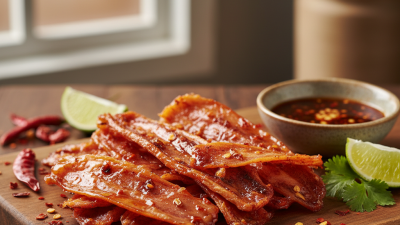
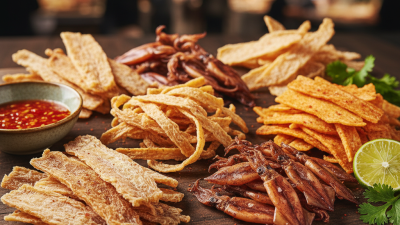
Global buyers increasingly seek seafood snacks with strong flavor, stable storage, and convenient serving formats. Spicy Dried Squid Snack meets these demands through chewy texture, savory aroma, and controlled seasoning. Each strip can fit lunch boxes, convenience stores, travel shelves, and online gift packs. The product also offers a practical way to introduce seafood flavors to customers unfamiliar with fresh squid.
Seafood processing specialist Dr. Michael T. Morrissey explains, “Reliable seafood quality begins with disciplined handling, not attractive packaging.” This principle matters throughout production. Suppliers should control raw squid temperature, drying time, water activity, spice consistency, and final seal strength. A clean production record supports buyer confidence. Traceable batches support responsible purchasing. Clear allergen declarations and destination-market labeling remain essential for lawful international distribution.
Wholesale success depends on more than heat level. Buyers may compare cut size, bite firmness, sodium content, carton efficiency, and shelf-life evidence. A transparent supplier can provide ingredient specifications, laboratory reports, packaging details, and export documentation. Small samples should be tested under realistic storage conditions. One weak seal can soften the product quickly. That lesson is easy to miss.
The opportunity is promising, but not perfect. Preferences differ sharply between regions. Some consumers want gentle chili warmth, while others expect intense spice and smoky notes. Therefore, a flexible product range may perform better than one universal recipe. This article examines sourcing, quality control, packaging, compliance, and market positioning for Spicy Dried Squid Snack wholesale. Practical evidence matters more than confident promises.
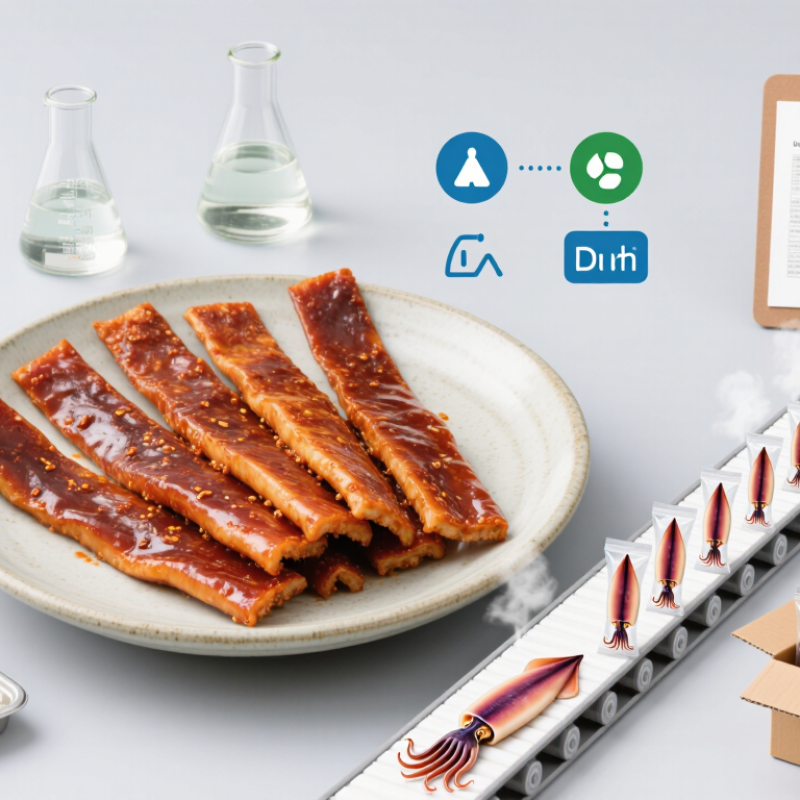
Product Profile: Spicy Dried Squid’s 20–30% Typical Moisture Range
Why Choose Spicy Dried Squid Snack for Global Wholesale?
Product Profile: Spicy Dried Squid’s 20–30% Typical Moisture Range
Spicy dried squid commonly carries 20–30% moisture after controlled drying. This range keeps the texture chewy, flexible, and easy to portion. It also supports stable handling during packing and international distribution. However, moisture percentage alone does not prove product safety or shelf stability. Water activity, salt levels, packaging quality, and storage temperature also matter. In practical wholesale checks, I recommend testing representative cartons, not only one sample. A single dry piece can give a misleading result.
Tips:
Ask for recent moisture and water activity reports. Check the texture after opening, especially near the package corners. Inspect for excess surface moisture, unusual odor, or leaking seasoning. Confirm that packaging matches the destination market’s labeling and food safety requirements. Keep cartons away from heat, sunlight, and sudden temperature changes. Small details matter.
For buyers, the 20–30% range offers a useful starting point for product comparison. Lower moisture may create a firmer bite, while higher moisture can feel softer and heavier. Yet these effects depend on squid size, seasoning, drying time, and processing conditions. Request clear specifications for net weight, ingredients, allergens, shelf life, and storage instructions. One lesson is easy to miss: shipment conditions can change the eating quality. A product that performs well in a warehouse may soften during humid transit. This is why pre-shipment samples, sealed cartons, and documented quality checks remain valuable for global wholesale decisions.
Market Demand: Seafood Consumption Reached 20.7 kg per Capita in 2022
Global seafood consumption reached 20.7 kilograms per person in 2022, showing strong demand for convenient marine protein. This figure also reflects changing eating habits, especially in urban markets. Consumers increasingly seek shelf-stable snacks that fit work breaks, travel, and outdoor activities. Spicy dried squid meets this need with a firm texture, savory aroma, and compact packaging.
For wholesalers, the product offers practical advantages. Drying reduces moisture and supports longer storage when handled correctly. Spicy seasoning can attract customers who prefer bold flavors over plain seafood. It also creates several retail possibilities, including small snack packs, family bags, and mixed seafood assortments. From my experience reviewing dried seafood products, consistent texture matters as much as flavor. Buyers notice excessive toughness quickly.
Quality control remains essential. Suppliers should verify raw-material origin, drying conditions, allergen information, and packaging integrity. Import requirements differ between markets, so documentation must be checked before shipment. The 20.7-kilogram figure is useful, but it does not represent every country equally. Some regions consume far more seafood, while others face price or supply limitations. This is easy to overlook. Spicy squid may also be too strong for some customers, and seasoning preferences can change by market. Small trial orders, clear labeling, and sensory testing can reduce that risk before larger wholesale purchases.
Why Choose Spicy Dried Squid Snack for Global Wholesale? - Market Demand: Seafood Consumption Reached 20.7 kg per Capita in 2022
| Market Indicator |
Value |
Reference Year |
Wholesale Relevance |
Source |
| Global apparent consumption of aquatic animal foods |
20.7 kg per capita |
2022 |
Demonstrates strong worldwide consumer demand for seafood-based foods, including convenient shelf-stable snacks. |
FAO, The State of World Fisheries and Aquaculture 2024 |
| Global aquatic animal production |
185.4 million tonnes |
2022 |
A large and diversified raw-material base supports international seafood processing and distribution. |
FAO, SOFIA 2024 |
| Aquaculture contribution to aquatic animal production |
94.4 million tonnes
approximately 51% of total production |
2022 |
Aquaculture has become a major supply channel, which can support more predictable sourcing for wholesale programs. |
FAO, SOFIA 2024 |
| Capture fisheries production |
91.0 million tonnes |
2022 |
Wild-caught seafood remains an important part of global supply, creating demand for traceability and responsible sourcing documentation. |
FAO, SOFIA 2024 |
| Contribution of aquatic foods to global animal-protein supply |
15% |
2021 |
Seafood is a significant source of animal protein, supporting demand for portioned, ready-to-eat products. |
FAO, SOFIA 2024 |
| Contribution of aquatic foods to total global protein supply |
6% |
2021 |
The category contributes to overall food consumption beyond traditional fresh-seafood channels. |
FAO, SOFIA 2024 |
| People employed in the primary fisheries and aquaculture sector |
61.8 million people |
2022 |
Shows the broad global economic scale of fisheries and aquaculture supply chains. |
FAO, SOFIA 2024 |
| Wholesale product-positioning opportunity |
Shelf-stable seafood snack |
Product format |
Dried squid can be positioned as a convenient, portion-controlled seafood snack; final shelf life, nutrition, allergens, labeling, and import compliance must be verified for each formulation and destination market. |
FAO Fisheries and Aquaculture |
Note: The 20.7 kg figure refers to global apparent consumption of aquatic animal foods per capita in 2022. Production figures exclude aquatic algae unless otherwise stated. Percentages may be rounded.
Nutrition Advantage: Squid Provides About 15.6 g Protein per 100 g
Why Choose Spicy Dried Squid Snack for Global Wholesale?
Squid offers a practical nutrition story for wholesale buyers. USDA FoodData Central lists about
15.6 grams of protein per 100 grams of raw squid.
Protein supports muscle maintenance and everyday satiety. This figure gives buyers a clear reference point. However, drying removes water and may increase protein concentration per 100 grams. Actual values depend on slicing, drying temperature, and moisture control.
Spicy dried squid also fits modern snack habits. It is lightweight, shelf-stable, and easy to portion. The FAO State of World Fisheries and Aquaculture 2024 reported
185 million tonnes of aquatic animals produced in 2022.
About 89% entered human food supplies. That scale shows strong global relevance for seafood-based foods. Still, protein alone should not drive purchasing decisions.
Seasoning requires closer attention. Spicy coatings may raise sodium, sugar, or allergen concerns. The World Health Organization recommends
fewer than 2 grams of sodium daily for adults.
Buyers should check laboratory results, nutrition panels, and moisture specifications before ordering. Texture matters too. A brittle strip can disappoint consumers, while excessive moisture can shorten shelf life.
My view is slightly cautious: the 15.6-gram figure is useful, but it is not a universal promise. Final nutrition depends on the finished product, not only the squid itself.
Wholesale Economics: Shelf Life Commonly Extends 6–12 Months Unopened
Why Choose Spicy Dried Squid Snack for Global Wholesale?
For global wholesalers, shelf life often matters more than a low purchase price. Unopened spicy dried squid commonly remains marketable for 6–12 months when sealed correctly. The exact period depends on water activity, oil content, seasoning, packaging, and storage temperature. FDA FoodKeeper guidance also stresses that storage life varies by product and package conditions. That makes a validated date more useful than a broad promise.
A 6–12-month window can support larger production runs and slower international distribution. It may reduce urgent replenishment, warehouse pressure, and markdown risk. Cartons can wait for mixed-container planning instead of moving immediately.
However, dried seafood still needs protection from humidity, oxygen, and direct light. Moisture can soften the texture and weaken the intended spicy aroma.
The FAO’s 2024 State of World Fisheries and Aquaculture reported 185.4 million tonnes of global aquatic animal production in 2022. This scale shows why dependable seafood handling matters across international supply chains. Codex General Principles of Food Hygiene recommends controlled storage and documented hazard controls. In practice, wholesalers should request shelf-life studies, lot dates, barrier-packaging specifications, and storage instructions. Do not rely on appearance alone. That assumption can fail. A product may look dry while quality is already declining. Shelf life is valuable, but only when suppliers verify it under realistic warehouse conditions.
Global Trade Readiness: HACCP and Codex Standards Support Import Compliance
Global Trade Readiness: HACCP and Codex Standards Support Import Compliance
Spicy dried squid can travel well when safety controls begin before packaging. FAO’s The State of World Fisheries and Aquaculture 2024 reports 185.4 million tonnes of aquatic animals produced in 2022. About 89% entered direct human consumption. This scale makes traceability more than paperwork. Each wholesale lot should carry a clear origin, production date, batch code, and ingredient record. Buyers also need allergen information, storage conditions, and verified shelf-life data.
A HACCP plan identifies hazards across receiving, cleaning, seasoning, drying, cooling, and packing. Practical checks may include drying temperature, drying time, water activity, foreign-material control, and sanitation records. Codex General Principles of Food Hygiene, CXC 1-1969, supports this preventive approach. Codex Code of Practice for Fish and Fishery Products, CXC 52-2003, adds relevant guidance for seafood handling. These references can help importers compare supplier controls with national requirements. They do not replace destination-country testing or registration.
The details matter.
A stable sealed pouch, readable labels, and moisture-resistant cartons reduce avoidable claims. Independent laboratory testing can support microbiological, chemical, and allergen verification. However, one certificate cannot prove every shipment is safe. Sampling plans may miss uneven contamination. That weakness deserves honest review. Suppliers should retain corrective-action records and explain what changed after a failed result. Reliable export readiness is demonstrated through repeated records, not confident language.
Why Choose Spicy Dried Squid Snack for Global Wholesale?
Global Trade Readiness: HACCP and Codex Standards Support Import Compliance
The Codex General Principles of Food Hygiene, CXC 1-1969, identifies seven HACCP principles.
Applying all seven principles helps a dried squid snack operation document hazards, controls,
monitoring, corrective actions, verification, and recordkeeping. Import requirements may vary
by destination, so HACCP and Codex alignment should be supported by the applicable national rules.