Inquiry
Form loading...

China Top 10 Squid Seafood Suppliers for Global Buyers?

China’s squid processing industry serves buyers across foodservice, retail, and seafood manufacturing markets. This guide introduces ten China-based Squid Seafood suppliers for global buyers seeking dependable sourcing options. The selection considers processing experience, export capability, product range, cold-chain management, and documented quality practices. It is not an absolute ranking. Supplier performance can vary by season, facility, and contract terms.

Products may include whole squid, cleaned tubes, tentacles, rings, and value-added portions. Buyers should confirm species, catch area, fishing method, glazing percentage, size count, and packing format. A carton labeled “10 kilograms” may contain different net weights after glazing. Small details matter.

Reliable suppliers should provide traceability records, product specifications, laboratory results, and relevant food-safety certifications. Buyers may also review HACCP systems, BRCGS or IFS certification, approved export registrations, and local regulatory compliance. These documents support trust, but they do not replace independent verification. Requesting samples is wise. So is checking temperature records from processing through delivery.

The companies discussed here may suit different purchasing needs, from frozen bulk shipments to retail-ready packaging. Their strengths are not identical. One may offer competitive pricing, while another provides stronger customization or more consistent sizing. Public information can become outdated, and supplier websites rarely show every operational limitation. Therefore, buyers should conduct audits, confirm production capacity, and clarify payment, inspection, labeling, and import requirements before signing agreements. A careful comparison can reduce surprises and support a more stable Squid Seafood supply chain.
China Top 10 Squid Seafood Suppliers for Global Buyers?

China’s Squid Seafood Industry and Global Supply Position

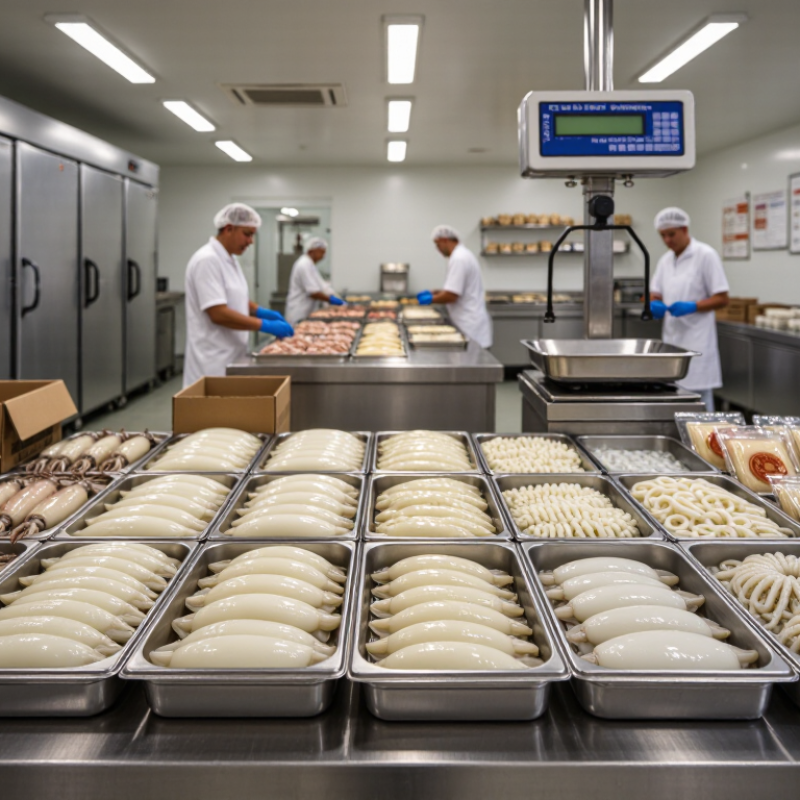
China’s squid seafood industry operates as both a processing base and a global distribution hub. Raw squid often arrives frozen, then moves through grading, cleaning, cutting, cooking, and IQF freezing facilities. China Customs data shows the country remains a major participant in international aquatic-product trade. This position supports large-volume orders, private specifications, and varied pack sizes.

The scale is significant. FAO’s State of World Fisheries and Aquaculture 2024 reported 185.4 million tonnes of global aquatic animal production in 2022, with 90.6 million tonnes used for direct human consumption. Squid is only one segment, yet it benefits from this expanding seafood network. UN Comtrade records under HS 030743 also identify China as a leading exporter of frozen squid and cuttlefish products. Numbers vary by product code.

Quality is less uniform than rankings suggest. A reliable supplier should provide catch-area records, production dates, glazing percentages, size counts, and cold-chain evidence. Buyers should inspect carton labels and test thaw loss. Small details matter. Public trade datasets may combine different squid species and processing forms, which can distort supplier comparisons. That weakness deserves attention. A “top ten” list should therefore combine shipment data, audit results, and recent sample performance, rather than relying on export volume alone. Fresh documentation often tells more than a polished website.

How to Evaluate China’s Top Squid Seafood Suppliers

China Top 10 Squid Seafood Suppliers for Global Buyers?

How to Evaluate China’s Top Squid Seafood Suppliers

A top-ten list is only useful when its criteria are clear. Global buyers should check processing licenses, export experience, species identification, and traceability records. Ask where each squid batch was caught, landed, processed, and stored. Reliable suppliers can provide lot numbers, harvest details, temperature logs, and current testing reports. Paperwork is not proof. Cross-check documents with independent laboratories or qualified inspection agencies.

Product consistency also matters. Request samples from different production dates, not only one carefully selected carton. Examine color, odor, glazing, texture, cut size, and net weight after thawing. Confirm whether the product is whole, cleaned, tubes, rings, or seasoned. Cold chain matters. Review container loading photos, storage temperatures, packaging strength, and delivery history. A factory visit can reveal workflow gaps that certificates miss. I have found that impressive facilities still need close monitoring.

Tips: Compare at least three suppliers using the same checklist. Put specifications, tolerances, testing frequency, labeling, and claim procedures in writing. Verify payment terms and production capacity before signing. Ask difficult questions about delays, rejected lots, and corrective actions. Samples reveal plenty. However, supplier performance can change with seasons, raw-material availability, and management turnover. Treat an initial approval as a starting point, not permanent proof. Recheck critical records before each major shipment.

Top 10 Chinese Squid Seafood Suppliers by Product and Capability

China Top 10 Squid Seafood Suppliers for Global Buyers

The top ten Chinese squid seafood suppliers differ mainly by product focus and processing capability. Some specialize in frozen whole squid for wholesale markets. Others produce cleaned tubes, rings, steaks, or baby squid for foodservice buyers. IQF processing helps separate pieces before packing. This reduces thawing waste.

Several suppliers offer multiple size grades, from small restaurant portions to large export blocks. Their factories may include peeling lines, metal detection, glazing control, and cold storage below -18°C. A few focus on dried squid, seasoned snacks, or ready-to-cook products. These categories require different moisture, texture, and packaging controls. Buyers should request recent inspection records, product specifications, and shipment samples.

The strongest suppliers usually support private packaging, carton customization, and regular container loading. They can explain catch area, processing dates, net weight, glaze percentage, and shelf-life testing. That practical detail matters more than a polished catalog. However, factory capacity can change during seasonal shortages. Some product photos may also show a better grade than the current offer. This is easy to overlook. Importers should compare sample texture after cooking, not only frozen appearance. They should also verify cold-chain handling, labeling accuracy, and destination-market requirements before placing a large order.

Export Standards, Certifications, and International Compliance

China’s top squid seafood suppliers should be judged by compliance, not export volume alone. Reliable suppliers maintain HACCP-based controls from unloading to frozen storage. Their facilities may also hold ISO 22000, BRCGS, or equivalent food safety certifications. Buyers should verify certificate numbers, issuing bodies, and expiration dates. A scanned certificate is not enough.

Export documentation must match the shipment exactly. Check species name, product form, harvest area, production date, lot number, and net weight. Many markets require health certificates, catch records, allergen declarations, and approved facility details. Import rules differ between the European Union, the United States, and other destinations. Suppliers should provide traceability records within hours, not after several days. Temperature logs should show continuous frozen storage, usually at or below -18°C. Sometimes paperwork looks perfect, but the lot code is unclear. That deserves a pause.

Tips: Request a recent third-party audit report and a sample document set. Test a small shipment before signing a long contract. Confirm labeling language, additives, glazing percentage, and microbiological limits with your customs broker. Also inspect packaging photos closely. Torn cartons, ice buildup, or missing production marks can signal weak controls. Compliance is a shared responsibility, and buyers still need independent verification.

China Top 10 Squid Seafood Suppliers for Global Buyers? - Export Standards, Certifications, and International Compliance
Anonymized supplier profiles based on major Chinese squid-processing and trading clusters. The table is intended for buyer screening rather than a legal ranking of individual companies. Certification scope, product availability, and export eligibility must be verified for each production site and shipment.
No. Primary Supply Cluster Common Squid Raw Materials Typical Export Product Forms Processing and Cold-Chain Profile Common Export Destinations Typical Certification Package Core Export and Compliance Documents Recommended Buyer Verification Points
1 Zhoushan, Zhejiang Illex argentinus, Todarodes pacificus, Uroteuthis edulis Whole round squid, cleaned tubes, rings, tentacles, IQF portions Large marine-product cluster; frozen storage, grading, glazing, and IQF processing commonly available East Asia, Southeast Asia, Europe, North America, Middle East HACCP-based food-safety system; ISO 22000 or equivalent; export registration where required; customer-specific GFSI certification may be available Commercial invoice, packing list, bill of lading, health or sanitary certificate, certificate of origin, catch documentation where applicable Confirm fishing area, species declaration, glazing percentage, frozen-core temperature, allergen controls, and certificate scope
2 Fuzhou and Pingtan, Fujian Uroteuthis edulis, Sepioteuthis lessoniana, imported oceanic squid Squid tubes, rings, strips, tentacles, breaded and seasoned products Strong seafood-processing base with trimming, portioning, marination, and individually quick-frozen production Japan, South Korea, ASEAN, Australia, Europe HACCP; ISO 22000 or similar; facility hygiene controls; additional retailer or market certification subject to buyer specification Health certificate, certificate of origin, packing list, ingredient declaration for value-added products, laboratory test reports Review additive declarations, microbiological limits, labeling translations, metal-detection records, and shelf-life validation
3 Dalian, Liaoning Todarodes pacificus, Illex argentinus, Dosidicus gigas Whole cleaned squid, tubes, rings, steaks, tentacles, bulk frozen blocks Northern cold-chain infrastructure; suitable for bulk frozen seafood, portion control, and long-distance reefer shipments Russia and CIS, Japan, South Korea, Europe, North America HACCP; ISO 22000 or equivalent; documented traceability; market-specific approval or registration when applicable Sanitary certificate, catch or harvest information, certificate of origin, temperature records, product specification sheet Verify raw-material origin, histamine controls where relevant, thaw-refreeze prevention, storage history, and container temperature data
4 Qingdao, Shandong Illex argentinus, Dosidicus gigas, Todarodes pacificus IQF rings, tubes, strips, tentacles, breaded squid, foodservice packs Integrated import-processing-export network with customized packing, private specifications, and reefer logistics Europe, North America, Middle East, Southeast Asia HACCP; ISO 22000; possible BRCGS, IFS, or equivalent third-party certification depending on facility Health certificate, certificate of origin, commercial documents, product test report, allergen and ingredient statement for processed items Audit the exact processing site, verify foreign-material controls, review pesticide and contaminant testing, and confirm packaging compliance
5 Zhanjiang, Guangdong Uroteuthis edulis, Sepioteuthis lessoniana, locally landed and imported squid Fresh-frozen whole squid, tubes, rings, tentacles, dried and seasoned squid Warm-water seafood cluster with rapid freezing, dehydration, seasoning, and retail-ready packing capabilities ASEAN, Hong Kong, Macao, Middle East, Africa HACCP; ISO 22000 or equivalent; export facility registration where required; product-specific controls for dried or seasoned goods Sanitary certificate, certificate of origin, ingredient and additive list, moisture or water-activity report for dried products Check water activity, preservative limits, salt content, packaging barrier performance, and compliance with destination-country labeling rules
6 Ningbo and Taizhou, Zhejiang Illex argentinus, Uroteuthis edulis, Todarodes pacificus Calamari rings, tubes, cut squid, tentacles, restaurant and wholesale formats Export-oriented operations with portion sizing, glazing control, IQF lines, and container consolidation Europe, North America, Australia, Japan, Middle East HACCP; ISO 22000 or equivalent; third-party audit reports available for selected plants Commercial invoice, packing list, bill of lading, health certificate, certificate of origin, product specification and COA Confirm net weight after thawing, glaze declaration, carton labeling, cold-chain records, and lot-level traceability
7 Xiamen, Fujian Uroteuthis edulis, Sepioteuthis lessoniana, imported oceanic squid IQF tubes, rings, strips, tentacles, marinated and ready-to-cook squid Value-added seafood capability with marination, battering, portioning, and retail or foodservice packaging Japan, South Korea, ASEAN, Australia, North America HACCP; ISO 22000 or equivalent; destination-market approval and customer audits as required Health certificate, certificate of origin, ingredient and allergen declaration, nutrition information, laboratory reports Validate formulation, allergen labeling, additive compliance, cooking instructions, microbiological results, and shelf-life evidence
8 Shantou and Shenzhen, Guangdong Uroteuthis edulis, Sepioteuthis lessoniana, imported frozen squid Dried squid, seasoned snacks, IQF rings, strips, tubes, and small retail packs Specialized in dried, seasoned, snack, and retail-oriented products; frozen and ambient packaging options may be available ASEAN, Hong Kong, Middle East, Africa, selected European markets HACCP; ISO 22000 or equivalent; additional retail and labeling audits depending on destination Sanitary certificate, certificate of origin, full ingredient list, additive declaration, nutrition panel, shelf-life testing Check moisture and water activity, sulfite or preservative use, allergen statements, packaging migration testing, and label language
9 Lianyungang, Jiangsu Illex argentinus, Dosidicus gigas, Todarodes pacificus Frozen whole squid, tubes, rings, tentacles, bulk blocks, and foodservice packs Bulk frozen seafood processing with sorting, cutting, glazing, carton packing, and cold-storage support Europe, Eastern Europe, Middle East, Africa, Southeast Asia HACCP; ISO 22000 or equivalent; documented supplier approval and traceability procedures Health certificate, certificate of origin, product specification, catch information where applicable, temperature records Verify species substitution controls, net-weight accuracy, foreign-material prevention, freezer temperature, and storage capacity
10 Beihai, Guangxi Uroteuthis edulis, Sepioteuthis lessoniana, regional coastal squid Whole frozen squid, tubes, rings, tentacles, dried products, and seasoned seafood Regional landing and processing base with rapid freezing, drying, seasoning, and mixed-container shipment options ASEAN, South Asia, Middle East, Africa, domestic-regional distribution HACCP-based controls; ISO 22000 or equivalent where implemented; export registration subject to destination requirements Sanitary certificate, certificate of origin, invoice, packing list, ingredient declaration, laboratory test report Confirm landing origin, product temperature, water activity for dried goods, additive compliance, packaging integrity, and shipment traceability

Sourcing, Pricing, Logistics, and Buyer Selection Considerations

China’s squid seafood supply chain serves buyers with frozen whole squid, tubes, rings, and cleaned products.

Sourcing should begin with species, catch area, processing method, size range, and glazing percentage. Request recent inspection reports, export registration details, HACCP records, and product photographs. A factory visit or independent audit can reveal more than a polished brochure.

Pricing depends on raw squid availability, season, size, yield, labor, packaging, and cold storage.

Compare quotations using the same specifications. A low price may hide heavy ice glazing, inconsistent sizing, or limited traceability. Ask for a pre-production sample.

Check its texture after thawing, cooking loss, odor, and net weight. Small differences matter.

Logistics require careful temperature control.

Frozen squid normally needs stable storage near minus 18 degrees Celsius, with temperature records throughout transport. Confirm carton strength, pallet dimensions, container loading plans, and port handling procedures. Delays can damage quality, even when the cargo remains technically frozen.

Select suppliers that communicate quickly and document deviations honestly. Experience helps, but it is not enough. A large processor may still miss delivery details. Smaller suppliers may offer closer inspection, yet lack backup capacity during peak seasons.

Buyers should compare production capacity, payment terms, claims procedures, lead time, and shipment history before signing. Personally, I would treat the first order as a controlled test, not a final judgment.