How to Buy Kami Frozen Squid Rings in Bulk?
Buying Kami Frozen Squid Ring in bulk takes more than comparing the price per carton. Buyers should confirm the product’s cut, size range, glazing, net weight, and pack format before requesting a quote. These details affect portion costs and how easily kitchen staff can handle each delivery. A clear specification sheet helps prevent surprises.
Ask suppliers for current product documents, lot information, storage instructions, and a sample when possible. Check that cartons arrive hard-frozen, with intact seals and readable labels. Details matter. Compare minimum order quantities, shipping costs, lead times, and payment terms, not just the headline price. Ask for evidence. A reliable supplier should answer specific questions clearly and provide documents that match the product being offered.
Plan receiving and storage before placing a large order. Make sure your freezer has enough space, and agree on delivery windows that suit your operation. For a first purchase, a smaller trial order may reveal issues that a quotation cannot. That costs time. It may still be worthwhile. I would also recheck thawing loss and cooked yield in your own kitchen; supplier figures do not always reflect your preparation method. A practical bulk-buying decision balances traceable product information, consistent quality, and realistic landed cost. When details are uncertain, pause and verify them before committing.
Identify the Kami Frozen Squid Rings Product and Specifications
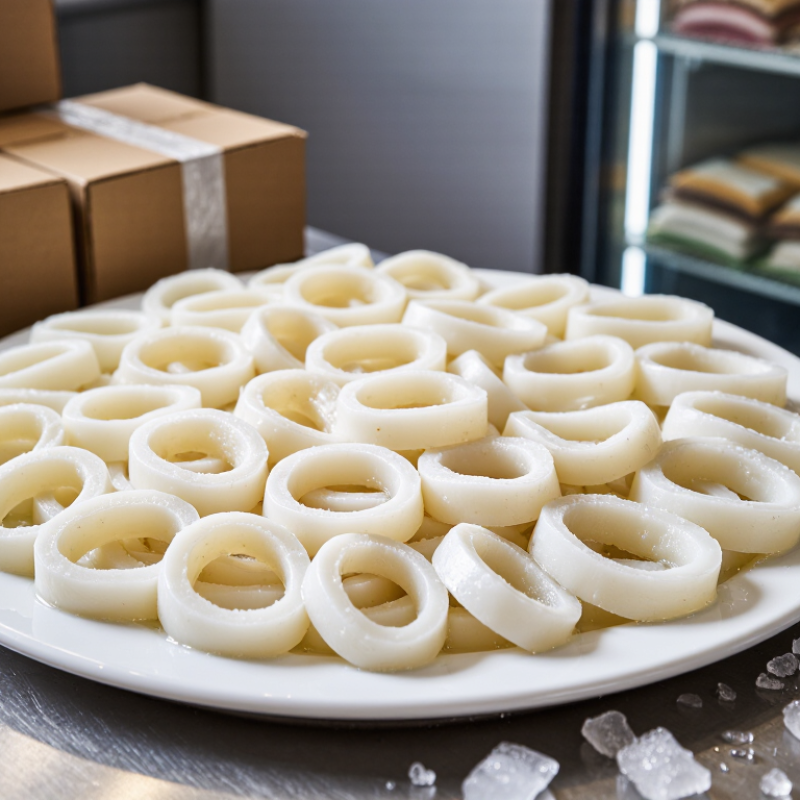
Before buying frozen squid rings in bulk, confirm the exact product format. Check whether the rings are raw or cooked, breaded or uncoated, and ready for further preparation. A clear product description should state the squid species when available, the ingredient list, and any added water or coating.
Details matter.
Read the pack specifications rather than relying on a product photo. Compare net weight, carton weight, ring size or count range, and units per case. Check the stated glazing percentage, since protective ice affects the edible yield. Ask for a current specification sheet if the listing leaves these details unclear. I would not assume every carton contains rings of identical size; processing can create some variation.
Inspect storage and handling information before placing a large order. The label should show the required frozen temperature, lot identification, production or packing date, and best-before date. Confirm that cartons arrive hard-frozen, with intact packaging and no signs of thawing and refreezing, such as heavy ice buildup or wet seams. Keep the paperwork. It helps trace a concern back to the lot. If cooking performance is important, test a small quantity first; I once underestimated how much coating could change the final portion size.
Find Bulk Suppliers and Confirm Available Pack Sizes
Contact several seafood wholesalers and ask for their current frozen squid ring specifications, case prices, and minimum order quantities. Ask for details. A reliable supplier should explain the product’s origin, processing method, storage temperature, and delivery schedule. Request a recent product sheet, and check whether the stated weight includes protective ice glaze. Net weight matters when comparing offers.
Pack sizes can vary from small retail-ready bags to food-service packs weighing several kilograms. Confirm the bag weight, bags per carton, cartons per pallet, and outer carton dimensions before ordering. Small print matters. A quoted case price may look attractive, but extra glaze or oversized cartons can change your true cost per usable kilogram. Ask whether mixed case quantities are available for a trial order, and confirm how long the product can remain frozen after delivery.
For a fair comparison, request a sample and inspect the rings while they thaw under safe refrigeration. Note their size, coating, smell, and how much liquid drains away. These checks are useful, though a small sample cannot represent every carton. Keep supplier replies and specifications together, then match them against your kitchen’s storage space and weekly demand.
Compare Prices, Minimum Orders, and Payment Terms
When buying frozen squid rings in bulk, compare the delivered cost per kilogram, not just the carton price. Check the net weight, ring size, glazing percentage, and pieces per pack. A lower quote may include more ice or smaller rings. Ask for a current specification sheet and a sample carton if the order is large. Small details matter.
Tips: Request quotes using the same pack size and delivery location. Confirm the minimum order quantity, whether mixed sizes are allowed, and how long the quoted price remains valid. Ask whether freight, insulated packaging, and cold-chain delivery are included. Get it in writing.
Payment terms can change the real cost. Compare deposits, balance-due dates, accepted payment methods, and any transaction fees. Clarify what happens if cartons arrive damaged or the product temperature is outside the agreed range. For a first order, avoid paying the full amount before confirming supplier details and written terms. I would also leave room in the budget for freight changes; they are easy to overlook, even after careful comparisons. Do not assume every supplier uses “minimum order” to mean the same thing. Ask whether it refers to cartons, total weight, or order value.
How to Buy Kami Frozen Squid Rings in Bulk? - Compare Prices, Minimum Orders, and Payment Terms
| Bulk Order Tier |
Indicative FOB Budget Range
(USD per kg) |
Typical Minimum Order |
Packaging and Product Checks |
Payment Terms to Request |
Best Suited For |
| Trial order |
$5.00–$8.00 |
500–1,000 kg, subject to supplier and destination |
Confirm ring size, raw or cooked product, glazing percentage, net weight, and carton specifications. |
Agree on deposit and balance terms in writing; request a pro forma invoice and shipping schedule. |
First-time buyers validating product quality and customer demand. |
| Small commercial order |
$4.50–$7.50 |
1–5 metric tons |
Request a product specification sheet, ingredient declaration, lot coding, and storage instructions. |
A deposit with the balance due against agreed shipping documents may be negotiable for a new trade relationship. |
Food-service distributors and smaller importers. |
| Container-scale order |
$4.00–$7.00 |
About 10–20 metric tons, depending on carton size and container loading |
Verify carton dimensions, pallet requirements, required certificates, and the shipment’s temperature-control plan. |
For eligible transactions, compare a letter of credit at sight with a documented deposit-and-balance arrangement. |
Established importers and larger wholesale distributors. |
| Repeat-volume contract |
Quoted against specification and shipment schedule |
Agreed monthly or quarterly volume |
Set written standards for ring dimensions, acceptable defects, glazing, packaging, and inspection procedures. |
Negotiate payment milestones, order forecast commitments, and remedies for specification or shipment discrepancies. |
Buyers seeking regular supply and consistent product specifications. |
Important: Price ranges are illustrative budgeting estimates, not verified live offers. Frozen squid ring prices vary with species, origin, processing, size, glazing, season, and freight terms. Confirm the exact product specification, minimum order, Incoterm, payment schedule, and applicable import requirements directly before placing an order.
Check Cold-Chain Shipping and Storage Requirements
Before ordering a bulk shipment of frozen squid rings, confirm how the supplier maintains the cold chain from freezer to delivery. Ask about insulated packaging, refrigerated transport, expected transit time, and whether temperature records are available. Plan delivery for a day when staff can receive and store the cartons promptly. A large shipment arriving near closing time can create avoidable delays.
Check the cartons as they arrive. They should be intact, dry, and still hard-frozen, with no signs of thawing or leakage. If possible, use a calibrated probe between packages rather than relying only on how cold the outer carton feels. Keep the delivery temperature record with your purchase documents. Small details matter. If the product feels soft or the packaging is damaged, separate it and contact the supplier before accepting it into regular stock.
Move accepted cartons directly into a freezer held at 0°F (-18°C) or colder, following the product label. Leave space for air to circulate, and avoid stacking boxes against vents. Seal opened inner packs tightly to reduce freezer burn and odor transfer. Use older stock first, and thaw only the quantity needed in a refrigerator. I once underestimated how much freezer space a bulk order would take; measuring shelf capacity beforehand is less exciting, but far more reliable.
How to Buy Frozen Squid Rings in Bulk? Check Cold-Chain Shipping and Storage Requirements
Keep frozen squid rings at or below -18°C (0°F) throughout transport and storage. Setting freezers to around -20°C provides an operating buffer; confirm product temperature at dispatch and receipt, and promptly move shipments into a suitable freezer.
Place the Order and Inspect the Delivery
Place the bulk order with the delivery details written clearly: product size, case count, requested delivery date, and receiving hours. Confirm how the rings will be packed and ask for the lot code and best-before date on the cartons. Keep a copy of the order confirmation. A small mismatch is easier to resolve while the paperwork is fresh.
When the shipment arrives, check the carton count before signing off. Look for crushed boxes, torn seals, wet patches, or signs that the product has softened and refrozen, such as heavy ice clumps. Use a thermometer to check the product temperature, following your supplier’s handling guidance and workplace procedures. Compare labels with the order, then move acceptable cartons promptly into freezer storage. Take clear photos of any damage and note it on the delivery record. A neat invoice alone tells little. Photos help, but they cannot show everything.
Tips: Keep a pen, thermometer, and phone ready at receiving. Check one carton from each pallet when practical. If something seems wrong, separate the affected cases and contact the supplier promptly; do not guess. I would also review the process after delivery, because one overlooked detail can make the next order harder.